Chocolate as an Art Medium
Chocolate is one of the most universally recognised substances on earth. It arrives already loaded — with memory, pleasure, childhood, desire, and a history stretching back a thousand years to Mesoamerican ceremony. And yet, in the hands of an artist, it becomes something else entirely: a medium that melts, shifts, blooms, and decays. It refuses permanence. And in that refusal, it speaks.
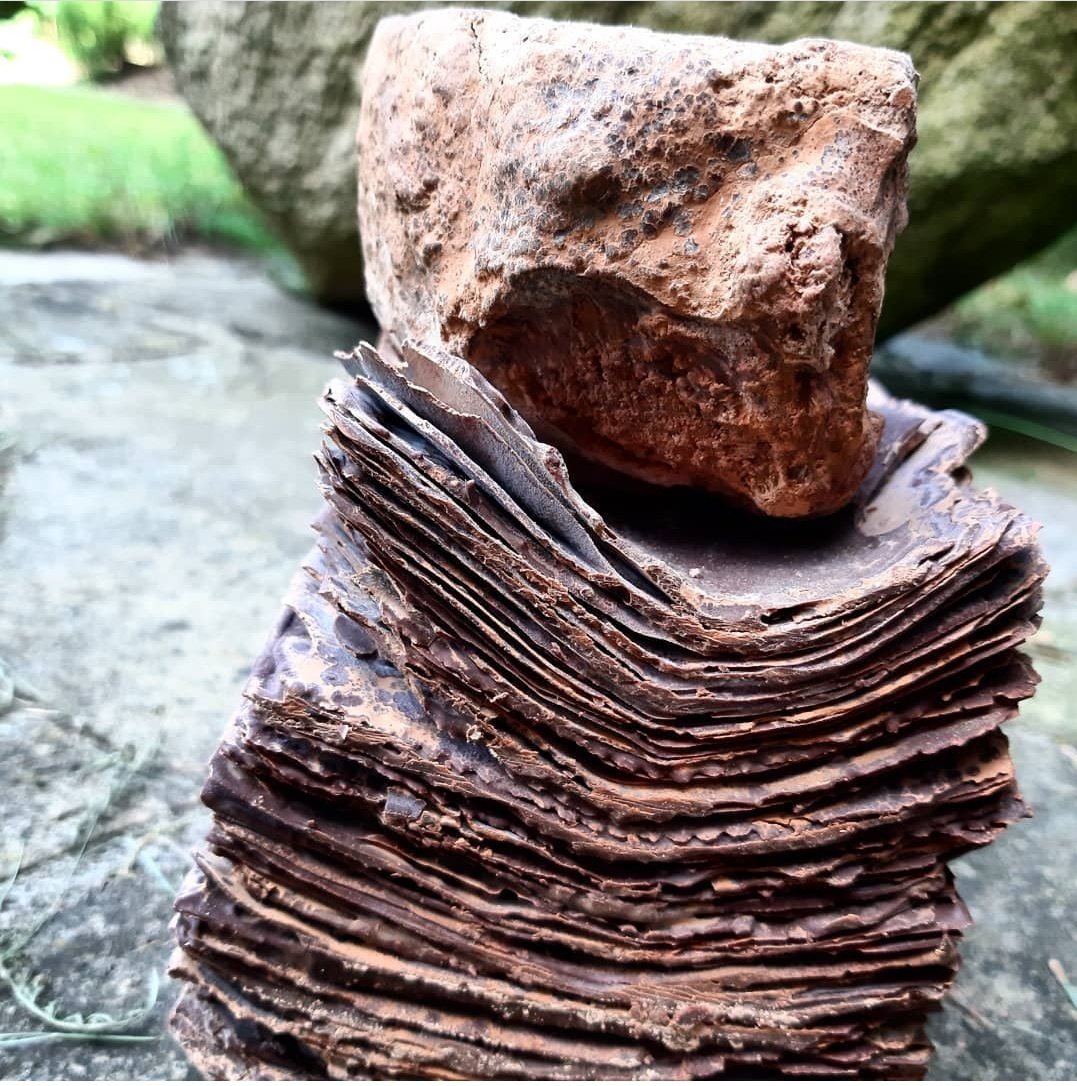
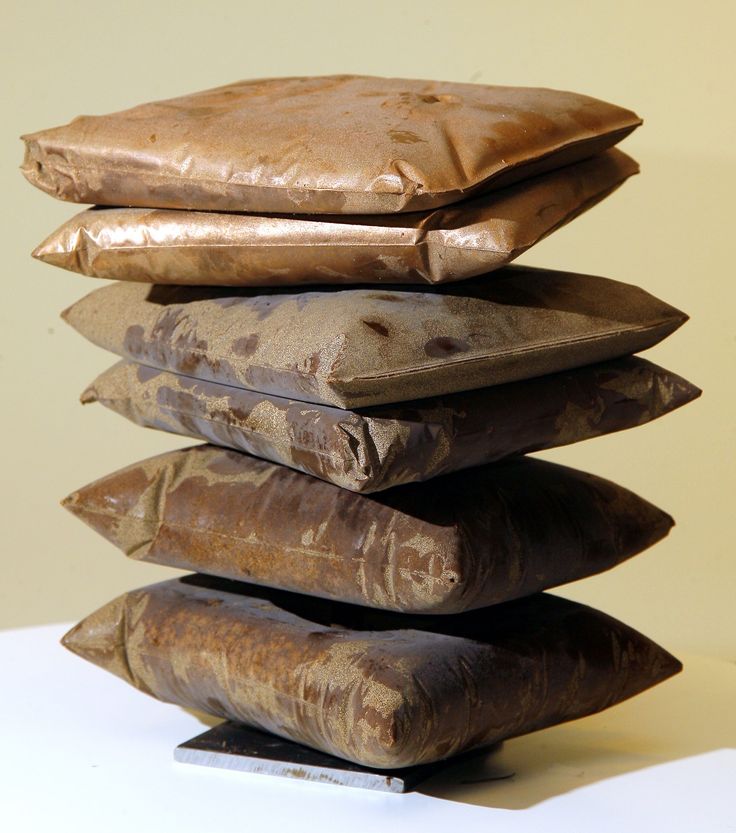
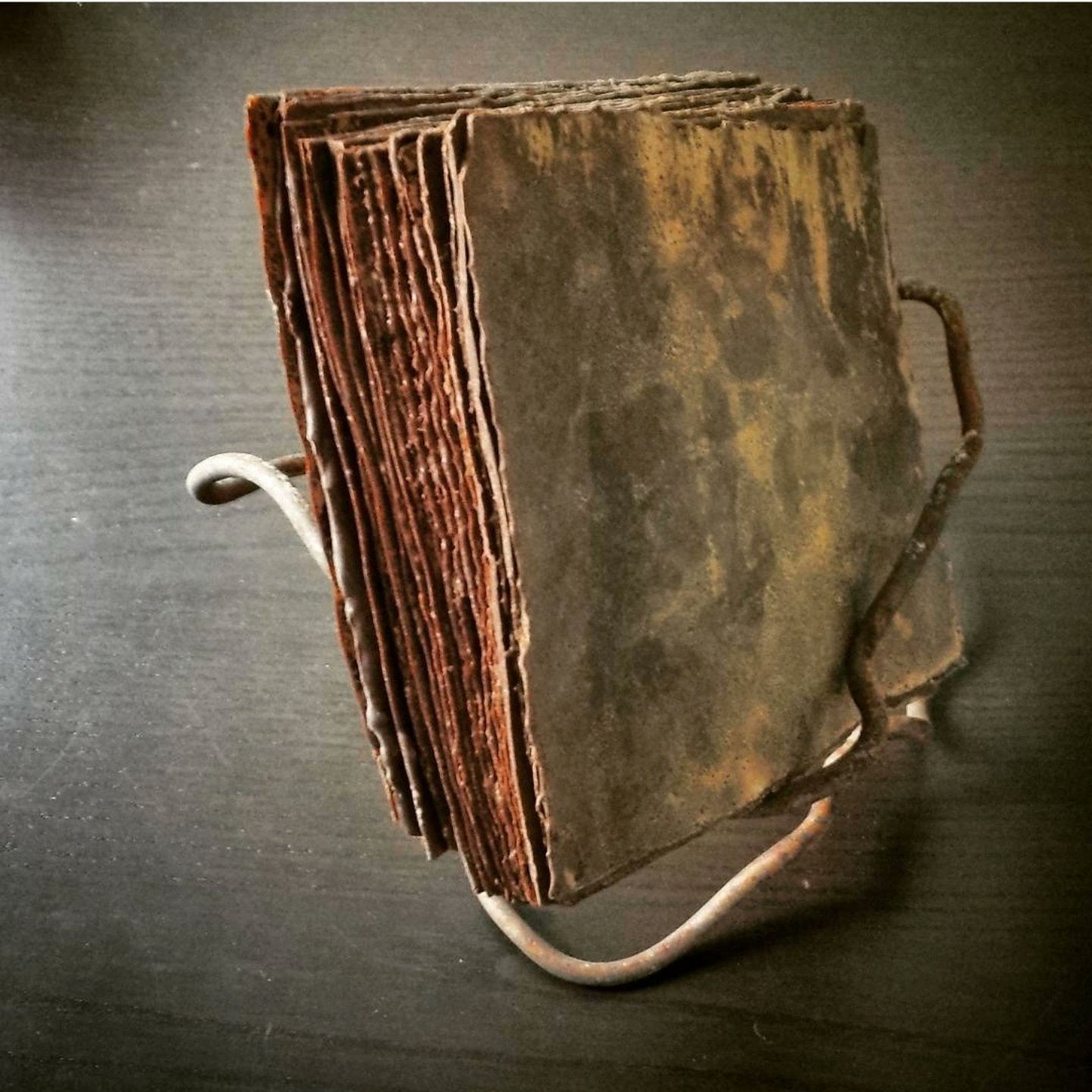
The relationship between chocolate and art is ancient. The cacao symbol appeared on vessels of Mesoamerican civilisations, marking the vast ritual and economic significance of the bean. In the early twentieth century, celebrated artists built careers producing chocolate advertising posters of extraordinary craft — and there, chocolate was the theme. But when the material itself becomes the medium, something more unsettling begins.
"The audience accepts chocolate and is asked to accept a sculpture in chocolate. To accept a new signified using the old signifier. It is an expression of the inexplicable, of the double meaning." Warren Laine-Naida, Art in Chocolate, Aschenbeck Media, 2009
A history written in cacao
From Mesoamerican ceremony to European luxury
The plant Theobroma cacao originates in Mesoamerica. The Maya and Aztec prepared from its ground seeds an aromatic drink consumed by the wealthy and used in ritual. The etymology of the word chocolate traces to the Nahuatl chocolatl — a compound referring to the frothing tool used in its preparation. The cacao tree was a celestial gift in Aztec tradition, associated with the god Ek Chuah, patron of commerce; the cacao bean itself was currency.
Spanish explorers carried cacao to Europe in the sixteenth century, where it was initially promoted for its medicinal properties and remained an expensive luxury available only to the wealthiest. By the seventeenth century, fashionable chocolate houses were appearing across western Europe. Christian theologians debated whether drinking chocolate during Lent was sinful. When milk was added to the mixture in the early eighteenth century, the price fell and the product democratised. The solid chocolate bar was created in England in 1847. The hydraulic cacao press invented by the Dutchman van Houten in the nineteenth century — which separated cacao butter from cacao mass — made mass production of both drinking chocolate and tablet chocolate possible. From small family businesses grew the great chocolate corporations: Waldbauer, Eszet, Stollwerck.
The Zart & Bitter (Tender & Bitter) exhibition at Schloss Neuenbürg in the Black Forest traced this full arc through original objects — eighteenth-century drinking vessels, 1900s advertising materials, chocolate vending machines from the Victorian era to the 1930s, and around one hundred historical casting moulds — and then turned to confront its other face: contemporary art made from chocolate itself.
Chocolate enters the twentieth-century gallery
Chocolate reappears in art from the 1960s onward, coinciding with the development of Fluxus — the movement that dissolved the boundary between art and everyday reality. Fluxus artists worked with everyday objects; the meal became performance; consumption became a creative act. It was natural that chocolate, with its dense network of sensory and cultural associations, would become an absorbing medium.
It appears in conceptual art, installation, painting, sculpture, performance, and new media. It can be received through multiple senses simultaneously. Its culturally fixed emotional associations are numerous and contradictory: momentary pleasure, temptation, excess, desire, femininity, addiction, romance, skin colour, colonial extraction. Its use in art creates no canon and follows no single logic. The elevation of the idea beyond the physical object — begun by Marcel Duchamp — had already changed how creation and reception were understood. In 1933, Salvador Dalí showed a tilting Art Nouveau chair with a chocolate seat at Galerie Pierre Colle in Paris: one leg submerged in a glass of beer, the work surviving only in a photograph by Man Ray. The sensory encounter was everything. The object was gone.
Key artists: chocolate as language
Joseph Beuys
In Zwei Fräulein mit leuchtendem Brot (Two Young Women with Shining Bread, 1966), a small piece of oil-painted chocolate sits between two letters, acting as an intermediary between the material and transcendent realms. The letters describe a journey: underground through Paris Métro stations, then in the open air on the return. Between these passages sits the chocolate — the "shining bread" — which Joseph Beuys described as saturated with spiritual energy.
In Wirtschaftswerte (Economic Values, 1980), created for an exhibition of European art after 1968 in Ghent, Beuys placed food products and everyday goods from the GDR on iron shelving. A chocolate bar, labelled by Beuys as ein Wirtschaftswerte, functioned as an anti-capitalist symbol with a transcendental dimension. Beuys stated of his sculpture: processes continue in most of them — chemical reactions, fermentations, colour changes, decay, drying up. Everything is in a state of change. The political and economic meaning of the GDR products was always intended to shift. When conservators misread his instructions and replaced flour with styrofoam granulate, Beuys intervened to correct the record. The chocolate bar was eventually replaced with an equivalent wooden element, the original label preserved.
Dieter Roth
Dieter Roth is widely considered the most significant and versatile artist to have worked with chocolate as a primary medium. His self-portrait busts P.O.TH.A.A.VFB (Portrait of the Artist as a Vogelfutterbüste — a bird-feeder bust, 1968) were initially cast from chocolate mixed with seeds and displayed outdoors, to be consumed by birds and other animals. The title references James Joyce's Portrait of the Artist as a Young Man, which Roth treated as sentimental kitsch; casting himself at 38, he depicted an old man. The works decay. That is the point.
Roth worked without specialist tempering: he melted chocolate in a water bath and poured it into silicone moulds, producing a grainy, matte, marbled material whose unstable crystalline structure actively accelerated the ageing he sought. He added seeds and plant matter, applied liquid chocolate with brush or spatula to iron plates, and submerged plastic figurines. His Familienbad (Family Bath, 1971) places small plastic figures in a flat plastic drawer filled with chocolate. His multi-decade installation Selbstturm / Löwenturm (Self Tower / Lion Tower, 1969–1998) was extended by his son Björn Roth after Dieter's death, through a lineage of reproduction and iteration that Björn describes as a train he is simply continuing to ride.
"Works of art should change like man himself, grow old and die." Dieter Roth
Janine Antoni
For Gnaw (from 1992), Janine Antoni gnawed the edges of a 227kg block of chocolate — poured in 23kg portions over many hours to ensure even cooling — and used the removed material to create lipsticks and chocolate-box displays exhibited in a mirrored vitrine. The chocolate cube is relatively stable and does not require full recreation for each exhibition. MoMA preserves it in a sealed crate and retains original material for spot repairs.
In Lick and Lather (1993–94), Antoni cast fourteen busts of herself — seven in soap, seven in chocolate — then washed away the soap portraits and licked away the chocolate ones. The work is intimate and sensory, engaging chocolate's most familiar connotations: desire, pleasure, the dissolution of self through consumption. When viewers bit the busts, damaging them, Antoni withdrew the affected pieces and recreated them by the same original process.
Ed Ruscha
At the 1970 Venice Biennale, Ed Ruscha created Chocolate Room: hundreds of sheets of paper screen-printed with Nestlé chocolate paste applied wall to wall across an entire room. Visitors interacted with it directly. Ants arrived. The installation was eventually dismantled and destroyed — Ruscha called it a one-shot thing. In 1995, the Museum of Contemporary Art in Los Angeles acquired exclusive rights to recreate it to the artist's specifications, using a new recipe based on Hershey's chocolate. The room's dimensions, door layout, and sheet count may vary; the four-wall interior must remain, and artist consultation is essential.
Anya Gallaccio
Anya Gallaccio's Stroke (first created 1994) applies melted high-quality dark chocolate to gallery walls with a brush — the technique referencing the work's title. The installation is powerfully sensory: the chocolate smell, initially intoxicating, becomes acidic and unpleasant over weeks. Visitors touch, scratch, and lick the surface, which greys and dulls unpredictably. Gallaccio emphasises the psychoactive and physical properties of chocolate and their individual reception. The idea of a chocolate room, she notes, is one thing; the reality is very much something else.
Warren Laine-Naida: the palimpsest of chocolate
Born in England and raised in Canada,Warren Laine-Naida studied English literature and marketing then trained as a chef. He spent many years working in food and in marketing and communication before settling in Germany in 1993 — first in Munich, later in Bremen and Dortmund — where his chocolate sculptures developed as a natural extension of his pastry practice and deepened over three decades into a sustained artistic language.
His characteristic forms are simple and geometric — bricks, bowls, cushions — photographed in natural outdoor settings. They resist immediate association with their material. There is nothing of the confectioner's display or the chocolate box. The forms feel found rather than made, archaeological, as if recovered from somewhere beneath. This is deliberate. Laine-Naida invites the viewer to work: to reassign meaning to a substance they believe they already know.
The science of a perishable medium
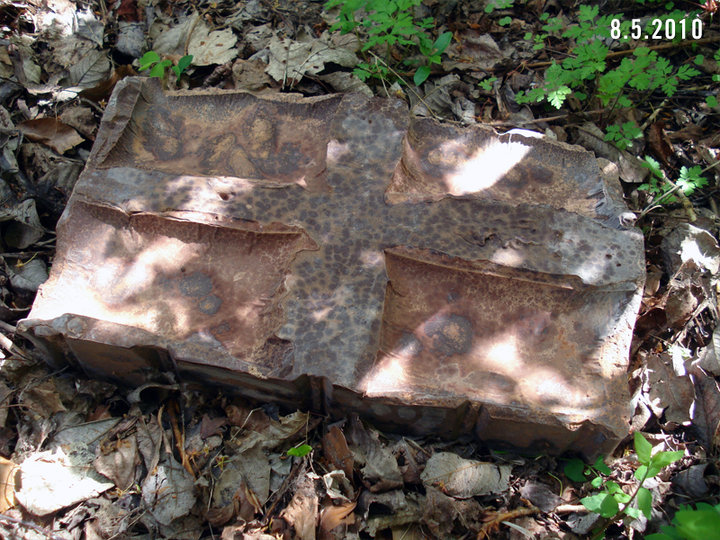
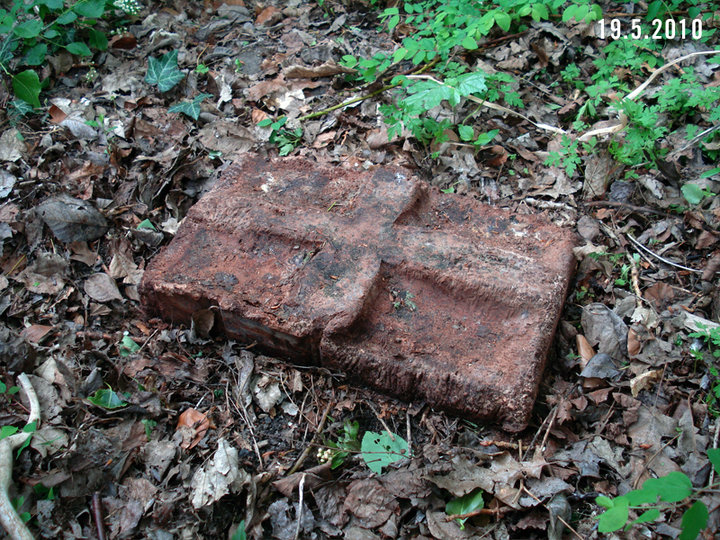
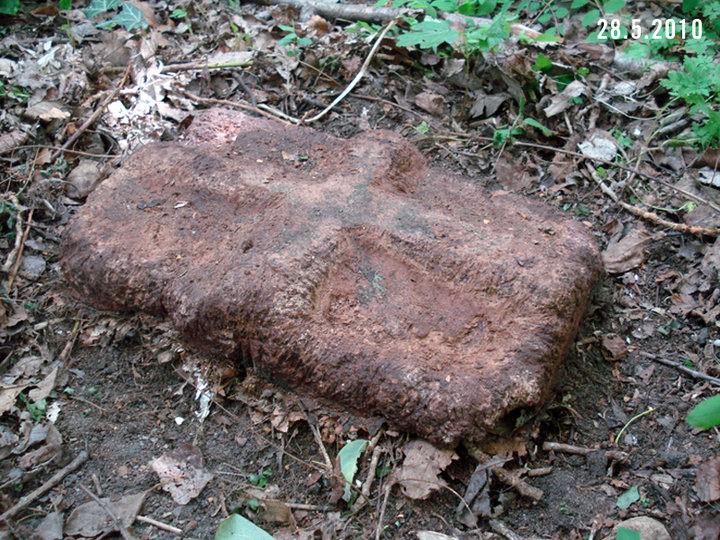
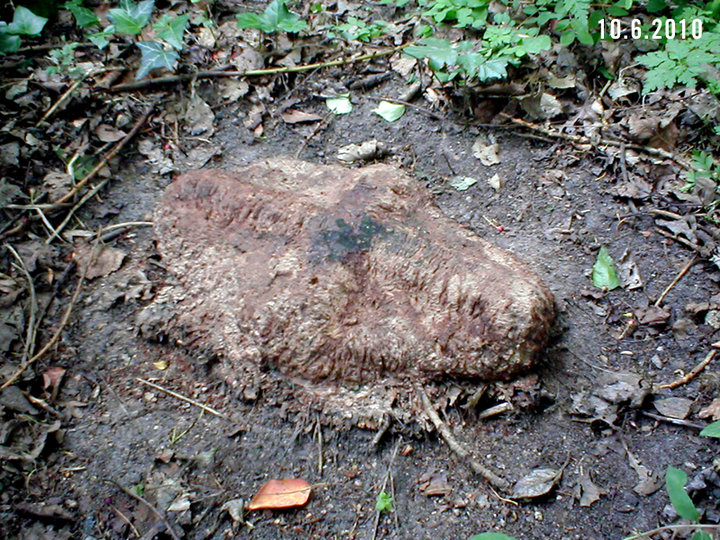
One of his most sustained works was the daily photography of a five-kilogram block of chocolate left for an entire month in the garden of Jacobs University in Bremen. The block changed — slowly, then rapidly. Animals visited and left marks. Light shifted with the season. A documentary record accumulated of material time. In doing so, Laine-Naida directly engaged the questions Dieter Roth had posed: what is the role of the maker when the material is the agent? What remains when the work is done?
"The chocolate sculptural canvas begins with the chocolate block. Six sculptures are broken down, melted and reformed into four blocks. These are the building blocks, the canvas, now the palimpsest of the chocolate sculptures. They too are photographed out of doors. There is a completion of the circle of my sculptures' creation and a return to the simplicity of texture, form and purpose." Warren Laine-Naida, TheChocolateLife Forums, September 2010
The concept of the palimpsest — a surface from which earlier writing has been partially erased and overwritten, retaining traces of what came before — is central to this practice. The dissolution and reformation of prior sculptures into new material is both a philosophical act and a physical one. Chocolate remembers in its crystalline structure, its surface texture, the history of its temperature changes.
Laine-Naida has also combined chocolate with glass, wire, wax, and barbed wire, producing conglomerations that refuse comfortable oral reading — that insist the eye encounter danger and harshness before pleasure. The conservation researcher Emilia Gdak, writing for the Novum research unit of the Academy of Fine Arts in Warsaw, noted his practice directly: he is an artist who combines professional confectionery experience with the world of contemporary art, leaving his sculptures in public space and documenting the processes that follow. In photographs, the progressive degradation of his chocolate block and the traces of animals gradually consuming the edible sculpture are visible — a parallel, she observed, to Roth's first conception of the Vogelfutterbüste.
When Dr. Constanze Küsel's landmark academic study Schokolade in der Kunst was published in 2010 by Frankfurt University Press — the first comprehensive art-historical examination of chocolate as a material in art — Laine-Naida travelled to Frankfurt for the launch. He wrote afterwards on TheChocolateLife Forums:
"With Schokolade in der Kunst an important cornerstone has been laid. This book gives us a point of reference, and I think an important validity for those who work in chocolate as an inedible medium. I have been waiting for such a book for many years. Neither at university, during my time at chefs school, nor in the intervening years has there ever been a point of reference for chocolate as a medium in art — until now." Warren Laine-Naida, TheChocolateLife Forums, September 2010
Küsel's study — originally submitted as a doctoral dissertation titled Die Made in der Schokolade (The Maggot in the Chocolate) at the Kunsthochschule Kassel — traces the development of chocolate as an artistic material from the 1960s onward, from Marcel Duchamp and Joseph Beuys through Dieter Roth to contemporary practitioners including Sonja Alhäuser, Hannah Wilke, Helen Chadwick, and Warren Laine-Naida. Küsel notes that the sexual connotation of chocolate in art is engaged almost exclusively by women artists — a finding that illuminates the gendered cultural weight this material carries. Her study also addresses the distinction between multiples and originals-in-series: chocolate's capacity to be cast in repeatable forms raises questions of reproduction and authenticity unique to the medium.
Laine-Naida's work was exhibited in the Zart & Bitter exhibition at Schloss Neuenbürg alongside Peter Anton, Günter Beier, Uta Weber, Anke Eilergerhard, Sibylle Burrer, and Renate Gross. His presence was also recognised at the first Bremer Schokoladenfest in November 2015, and his practice has been documented by the Polish specialist publication Sekrety Czekolady, which described him as one of the true artists engaged with chocolate today — a figure whose work is distinguished from commercial confectionery by its engagement with the same questions posed by Dieter Roth: What is the role of the maker? What is the life of a made thing?
The science of a perishable medium
Chocolate is a complex organic material: technically an emulsion of sugar and cacao particles coated in a fat matrix. Cacao butter is polymorphic, existing in six crystalline forms with different melting points ranging from 17°C to 36°C. The most desirable for confectionery is Form β, which guarantees stable consistency at room temperature and a characteristic snap. Less stable forms produced without proper tempering are prone to accelerated blooming.
Fat bloom — the grey or white surface deposits that form when unstable fat fractions migrate under warmth — weakens the structure and causes powdering. Sugar bloom occurs under humidity: condensing moisture dissolves surface sugar, which recrystallises on evaporation, leaving a granular, sifting residue. The aromatic molecules responsible for chocolate's characteristic smell also oxidise; the recognisable flavour typically begins to be lost after one year.
Dark chocolate is, relative to many other edible art materials, relatively stable. Its polyphenols and flavonoids exert antioxidant activity that slows oxidation. The 227kg chocolate block in Janine Antoni's Gnaw remained stable through multiple exhibitions while the companion lard block had to be recreated each time. Additives, however, introduce instability: nuts encourage fat bloom; sugar foams absorb fat; alcohol releases ethanol that causes surface sugar migration; solid inclusions create structural barriers to the chocolate's thermal expansion and contraction, causing cracks.
Dieter Roth's working methods — melting without tempering, pouring at high temperatures — produced grainy, matte material whose unstable crystal structure was a feature, not a flaw. He wanted the surface to change. He wanted the insects to come.
Conservation strategies
The preservation of chocolate artworks depends, above all, on the artist's stated intention — that intention, documented through direct interview wherever possible, is the primary guide to every conservation decision. Where preservation is the goal, recommended museum storage conditions are: constant temperature of 16–20°C, relative humidity below 50%, no direct light or heat sources, and isolation from strong odours. Modified Atmosphere Packaging, sealing works in nitrogen or other inert gases, offers the most complete protection.
"Professional chocolatiers often add protective layers, such as fine cocoa butter sprays or specialized edible varnishes, to shield the sculpture from moisture and prolong its smooth, polished finish." Culinary Arts Academy Switzerland
Three approaches to Dieter Roth's works have been documented: non-intervention (preserving the processual idea of destruction in accordance with the artist's wishes); halting biodegradation through targeted biological controls; and passive conservation — gentle, minimally invasive monitoring — which MoMA considers its preferred strategy. Pheromone traps for specific insect species represent one documented success: a six-week quarantine of Roth's Familienbad using species-specific traps and adhesive substrate drew the colony away from the object.
Cleaning must avoid solvents wherever possible, as even solvent vapour can disrupt the crystalline structure of chocolate and accelerate fat migration. Soft-bristle brushes with a low-suction vacuum are the preferred approach for surface deposits. Where repair is required, microcrystalline wax or high-quality chocolate have been proposed as adhesive and fill material. The use of scent absorbers and emitters — technologies from the food packaging industry — may also offer future conservation possibilities for works whose sensory properties (particularly smell) are central to the artist's intention.
Art in Chocolate: the book
Warren Laine-Naida's 2009 publication Art in Chocolate (Aschenbeck Media) is the fullest articulation of his practice in print. The book conveys the four seasons through full-page photographs of chocolate sculptures, each accompanied by a short seasonal story and an original recipe — bridging gallery and kitchen, image and taste. Published in six languages — English, German, Russian, Spanish, French, and Japanese — it mirrors the universality of its material.
"It is an internal dialogue which develops in discussion with the sculptures, and closer contact with the material does not remain purely intellectual, but grasps the levels of emotion and works in relation to self-experience." Dr. Isabelle Schwarz, foreword to Art in Chocolate, 2009
The sculptures are photographed outdoors in seasonal light; frost, rain, and animal contact are collaborators, not intrusions. Time is not the enemy of the work. It is part of the work. Chocolate, in its sweetness and its darkness, its pleasure and its weight, its ancient ritual significance and its contemporary mass-market omnipresence, is a mirror. What we see in it — indulgence, comfort, power, grief, desire — tells us more about ourselves than about the material. The chocolate artist simply holds the mirror steady, and waits.
Frequently asked questions
What makes chocolate a unique artistic medium?
Chocolate responds to heat, humidity, time, and the human hand — it melts, moulds, crystallises, blooms, and decays. This lifecycle mirrors core concerns of contemporary art: creation, transformation, and eventual disappearance. Its cultural weight as indulgence, ritual object, commodity, and symbol of desire makes it a material saturated with associative meaning before a single artistic mark is made. It can be received through multiple senses simultaneously.
Which artists have used chocolate as an artistic medium?
Key artists include Joseph Beuys (Zwei Fräulein mit leuchtendem Brot, 1966; Wirtschaftswerte, 1980); Dieter Roth, whose chocolate self-portrait busts were designed to decay and be consumed by animals; Janine Antoni (Gnaw, 1992; Lick and Lather, 1993–94); Ed Ruscha (Chocolate Room, Venice Biennale, 1970); Anya Gallaccio (Stroke, 1994); and Warren Laine-Naida, whose geometric chocolate sculptures photographed in outdoor settings engage questions of material impermanence and the maker's role.
What is Eat Art and how does chocolate relate to it?
Eat Art is a movement in which food becomes the primary artistic material, transforming consumption into a creative and cultural act. It emerged in connection with Fluxus in the 1960s, dissolving boundaries between art and everyday reality. Chocolate is one of Eat Art's most resonant materials because it combines rich sensory properties with deep cultural associations: pleasure, desire, addiction, femininity, colonial history, and commerce.
How are chocolate artworks conserved in museums?
Conservation of chocolate art depends entirely on the artist's stated intention — that must always be the primary guide. Dieter Roth wanted his works to decay; halting that process contradicts his vision. Where preservation is the goal, recommended conditions are a constant temperature of 16–20°C and relative humidity below 50%, with protection from light, heat, and strong odours. Modified Atmosphere Packaging in nitrogen offers the most complete protection. Biological threats are addressed through quarantine and targeted intervention using pheromone traps or passive monitoring.
What is Warren Laine-Naida's approach to chocolate sculpture?
Warren Laine-Naida treats chocolate as a language of double meaning. His geometric forms — bricks, bowls, cushions — are photographed outdoors, where the environment participates in the work over time. He explored the concept of the palimpsest: melting prior sculptures down and recasting them as new blocks that carry the trace of what came before. He also combines chocolate with glass, wire, and barbed wire. His 2009 book Art in Chocolate pairs photographs with seasonal stories and recipes, published in six languages.
Sources & Further Reading
- Krzciuk, P. Czekolada w sztuce, sztuka w czekoladzie Warrena Laine-Naidy. Sekrety Czekolady (Polish)
- Gdak, E., under Prof. Dr. hab. I. Szmelter. Czekolada w konserwacji. Novum, Akademia Sztuk Pięknych, Warsaw, 15 July 2022. novum-konserwacja.asp.waw.pl (Polish)
- Laine-Naida, W. Blog posts: Schokolade in der Kunst by Constanze Küsel (2010-09-24) and Deconstructing the chocolate. Creating the palimpsest. (2010-09-09). TheChocolateLife Forums
- Küsel, C. (2010). Schokolade in der Kunst: Eine kunstgeschichtliche Materialprüfung. Frankfurt University Press. ISBN 978-3-86983-006-3.
- Schloss Neuenbürg. Zart & Bitter: Eine Ausstellung über Schokolade und Kakao. schloss-neuenbuerg.de (German)
- Laine-Naida, W. (2009). Art in Chocolate. Aschenbeck Media. Goodreads
- Schwarz, I. (2009). Foreword. In W. Laine-Naida, Art in Chocolate. Aschenbeck Media.
- Wharton, G., Blank, S. D., & Dean, J. C. (1995). Sweetness and Blight: Conservation of Chocolate Works of Art. In J. Heuman (ed.), From Marble to Chocolate. Archetype Publications, London.
- Zycherman, L. (2013). In Suzuki, S. et al. Wait, Later this Will be Nothing: Editions by Dieter Roth. Museum of Modern Art, New York.
- Homborg, A. (2021). Im Gespräch mit Warren Laine-Naida. theobroma-cacao.de